Bergen-Lafayette's Parks, Art, And Real Estate Potential
May 14, 2026
May 14, 2026
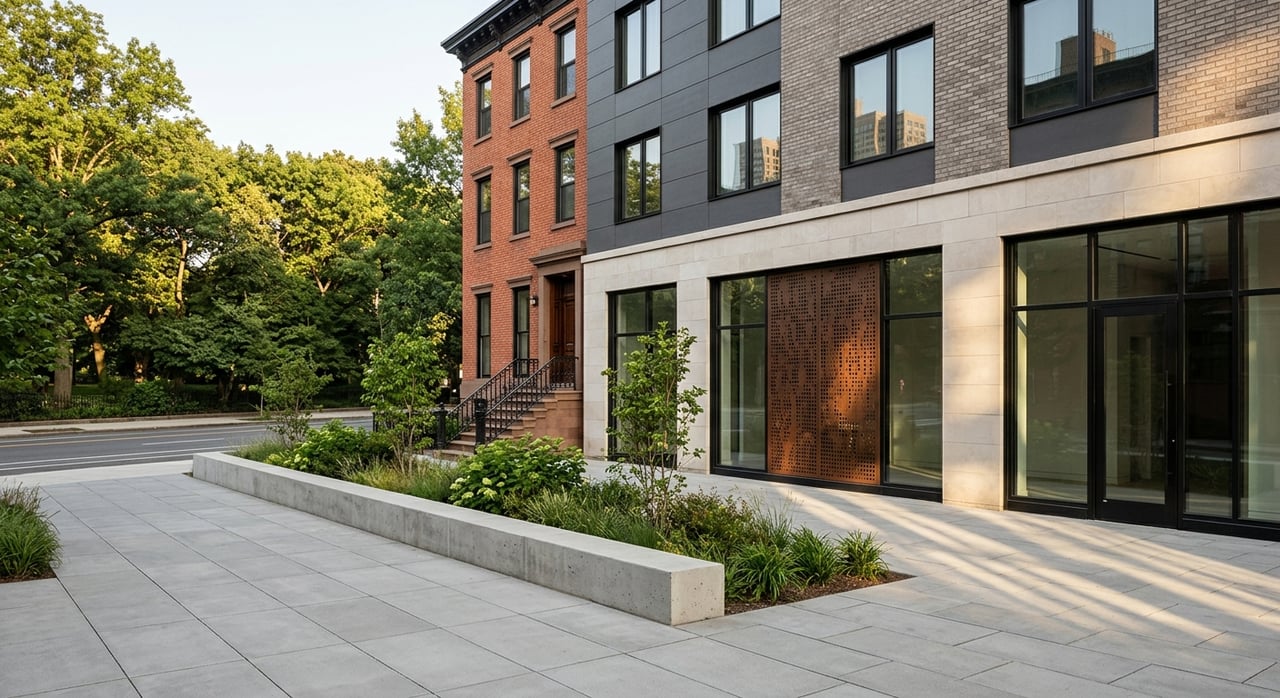
If you are searching for a Jersey City neighborhood with real park access, visible public investment, and room to grow, Bergen-Lafayette deserves a closer look. This part of the city offers a mix of historic character, newer development, and creative energy that feels different from both Downtown and Greenville. For buyers, sellers, and investors, the appeal is not just what Bergen-Lafayette is today, but where it appears to be headed. Let’s dive in.
Bergen-Lafayette is part of Ward F in Jersey City, and that matters when you look at the available public data. City planning materials describe Ward F as a mostly residential area with small commercial strips along major roads, and they note that Lafayette Park sits in the eastern section close to Downtown. That helps frame Bergen-Lafayette as a transition market rather than a fully built-out luxury district.
It is also important to know that ward-level data is only a proxy for the neighborhood. Ward F includes areas beyond Bergen-Lafayette, including Paulus Hook and Van Vorst Park. Even so, the ward data still gives you a useful picture of why this neighborhood has attracted more attention from buyers who want a balance of access, character, and long-term potential.
One of Bergen-Lafayette’s biggest strengths is its connection to open space. Liberty State Park is the clearest example, giving the neighborhood a major recreational anchor on Upper New York Bay. According to the New Jersey Department of Environmental Protection, it is also the only location in New Jersey with ferry service to Ellis Island and the Statue of Liberty.
That park access is paired with transit access, which is rare and valuable. NJ Transit lists the Liberty State Park Light Rail Station between Communipaw and Johnston avenues on the Hudson-Bergen Light Rail. For many buyers, that combination of fixed-rail transit and major park access adds real lifestyle value.
Berry Lane Park adds another layer to the story. Jersey City says the former rail, junkyard, and auto-repair site was transformed into a 17-acre park with a playground, splash park, exercise stations, courts, fields, and a skatepark. The city has also continued neighborhood-scale park improvements in places like Fairmount Park and Bethune Park, which points to ongoing public-realm investment.
Parks do more than create pleasant weekends. They can shape how a neighborhood feels block by block, influence buyer interest, and support long-term demand. In Bergen-Lafayette, the open-space story is not limited to one destination park, which makes the area feel more livable day to day.
Bergen-Lafayette is not an isolated pocket of creativity. Jersey City’s 2025 Art & Studio Tour spans about 120 venues across all six wards and specifically includes an art crawl through Bergen-Lafayette, Greenville, and West Side. That places the neighborhood within a larger citywide creative circuit.
Public art also plays a visible role in how Jersey City builds neighborhood identity. The city says its Mural Arts Program began in 2013 and has helped turn blank walls into an outdoor art gallery across the city. For Bergen-Lafayette, that matters because it supports the sense that the area is actively evolving, not standing still.
Civic amenities are part of that momentum too. In 2024, a new Communipaw Library branch opened next to the Liberty State Park Light Rail Station, and the city described it as a STEAM-focused facility for Bergen-Lafayette. For many households, amenities like a modern library and nearby transit help shape how practical and connected a neighborhood feels.
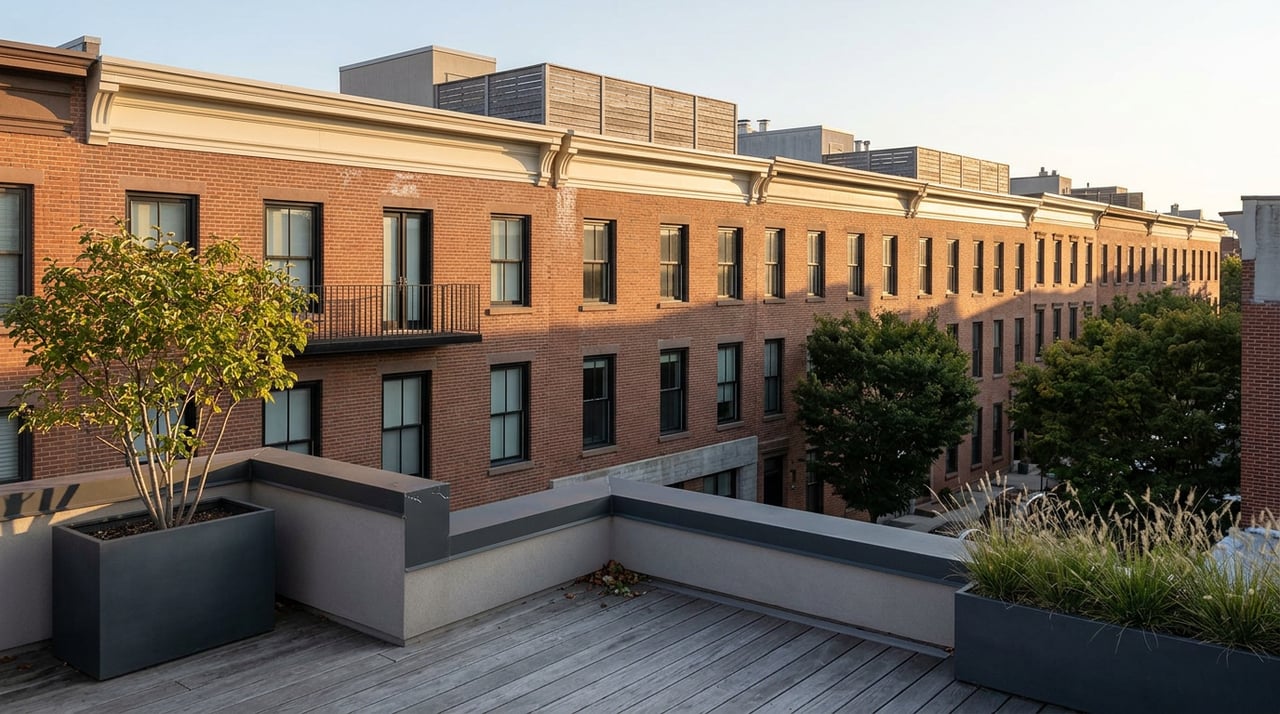
One reason Bergen-Lafayette stands out in Jersey City is that the housing stock does not feel one-note. Ward F data shows a 32.1% owner-occupancy rate, with 45% of housing units built since 1990 and 22% built before 1940. That helps explain why the neighborhood can feel like a blend of older homes, newer infill, and mixed-use buildings instead of a single housing type.
The neighborhood also has real historic texture. Jersey City preservation records identify 384 Communipaw Avenue as a key-contributing building in the eligible Communipaw-Lafayette Historic District and describe it as a rare pre-Civil War example with origins likely dating to about 1850 to 1860. Another preservation memo notes that Whiton Street contains an intact collection of late-19th-century masonry and frame dwellings.
For buyers, this mix can be exciting because it creates options. You may find historic details on one street, newer construction on another, and corridor properties that fit a different use case entirely. That variety can open the door for first-time buyers, move-up buyers, and investors who are looking for something more layered than a standard condo market.
Bergen-Lafayette’s real estate potential is tied to more than housing stock alone. The Jackson Hill Redevelopment Plan, amended in 2024, covers a 2.3-mile corridor linking McGinley Square to Greenville. The plan aims to support mixed-use growth near light rail, preserve historic structures, encourage adaptive reuse, and add more housing, employment, and public space.
This is one reason Bergen-Lafayette is often seen as a neighborhood in motion. It sits within a broader transit-oriented redevelopment framework rather than relying on a few disconnected projects. That kind of planning context often matters to buyers and sellers because it can influence future inventory, streetscape changes, and commercial activity.
The project pipeline also remains active. Recent Jersey City planning records show proposals including a five-story mixed-use building with ground-floor retail at 306 Johnston Avenue and a six-story mixed-use building with 59 homes and ground-floor commercial space at 612-616 Communipaw Avenue. Those filings reinforce the idea that development interest in the area is ongoing.
Bergen-Lafayette is not a neighborhood where every property should be judged the same way. Historic-preservation status, redevelopment overlays, and whether a home sits on a quieter residential street or a busier corridor can affect renovation scope, approvals, and even the type of property available. If you are buying or selling here, local guidance matters.
The best way to understand Bergen-Lafayette is to compare it with nearby Jersey City markets. Downtown, represented by Ward E in city data, is the high-intensity comparison point. Ward E has a reported median household income of $151,000, a 20% homeownership rate, and 54% of units built since 1990, with much of the newer stock in multifamily rental buildings.
Bergen-Lafayette offers a different feel. It is more neighborhood-scaled, more mixed in housing type, and more rooted in a blend of old and new. For buyers who want proximity to Downtown without stepping directly into its most built-out environment, that can be a meaningful distinction.
Greenville, represented by Ward A, provides another useful comparison. Ward A has a 43.3% homeownership rate, about a quarter of housing built before 1940, and city materials note that it has not shared in the redevelopment activity seen elsewhere in Jersey City over the last 20 years. Compared with Greenville, Bergen-Lafayette appears more tied to current infill and redevelopment momentum.
Ward F’s population grew by 32% from 2010 to 2022, reaching nearly 52,000 residents. That kind of growth helps explain why Bergen-Lafayette has drawn more attention. Buyers are looking for neighborhoods that still offer character and relative flexibility, while sellers want to understand how public investment and redevelopment may shape demand.
If you are buying, Bergen-Lafayette may appeal to you if you value park access, light rail connectivity, and housing that feels less uniform than a high-rise-heavy market. If you are selling, the neighborhood’s story is often bigger than the home itself. The surrounding parks, civic investment, arts presence, and planning activity can all help shape how your property is positioned.
For investors and development-minded buyers, the appeal is a little different. The neighborhood sits in a middle-ground market with a visible mix of historic fabric, mixed-use corridors, and active filings. That does not remove the need for careful due diligence, but it does help explain why Bergen-Lafayette stays on the radar.
Bergen-Lafayette is compelling because it does not fit neatly into one category. It has major park access, active civic and cultural investment, a mix of historic and newer housing, and a redevelopment framework that supports continued change. In a city as varied as Jersey City, that combination gives the neighborhood a distinctive position.
If you are trying to decide whether Bergen-Lafayette fits your goals, the details matter. The right block, property type, and timing can make a big difference in how you experience the neighborhood and its long-term potential. If you want guidance grounded in Jersey City market knowledge, Team Francesco is here to help you navigate the next step.

Experience Matters! Make Team Francesco your #1 choice for all your real estate needs. With nearly 25 years of experience, you can trust Team Francesco is the best in the business to guide you in even the most challenging markets.
Stay up to date on the latest real estate trends.

The Built-In Protections Behind Every Strong Offer.
Your Guide to Buying a Historic Home in Jersey City's Landmark Neighborhoods.
We are there to serve and educate you every step of way, whether you’re seeking or selling property in the local area, or relocating anywhere around the globe. Count on us to listen to your needs, respect your privacy, and deliver the best sales experience possible.