Why Jersey City Heights Attracts Brooklyn Buyers
April 23, 2026
April 23, 2026
If Brooklyn has started to feel like a stretch for your budget, you are not alone. Many buyers still want a city feel, practical access to Manhattan, and housing that feels more like a home than a tower apartment. That is exactly why Jersey City Heights keeps showing up on the radar, and this guide will help you understand what makes it stand out. Let’s dive in.
Jersey City Heights, often called The Heights, offers a different kind of city living. According to the Heights Special Improvement District, it is a traditional hilltop neighborhood with mostly two- and three-family houses, a 3/4-mile Central Avenue corridor, more than 240 storefronts, skyline views from the Palisades, and major parks including Pershing Field and Riverview-Fisk.
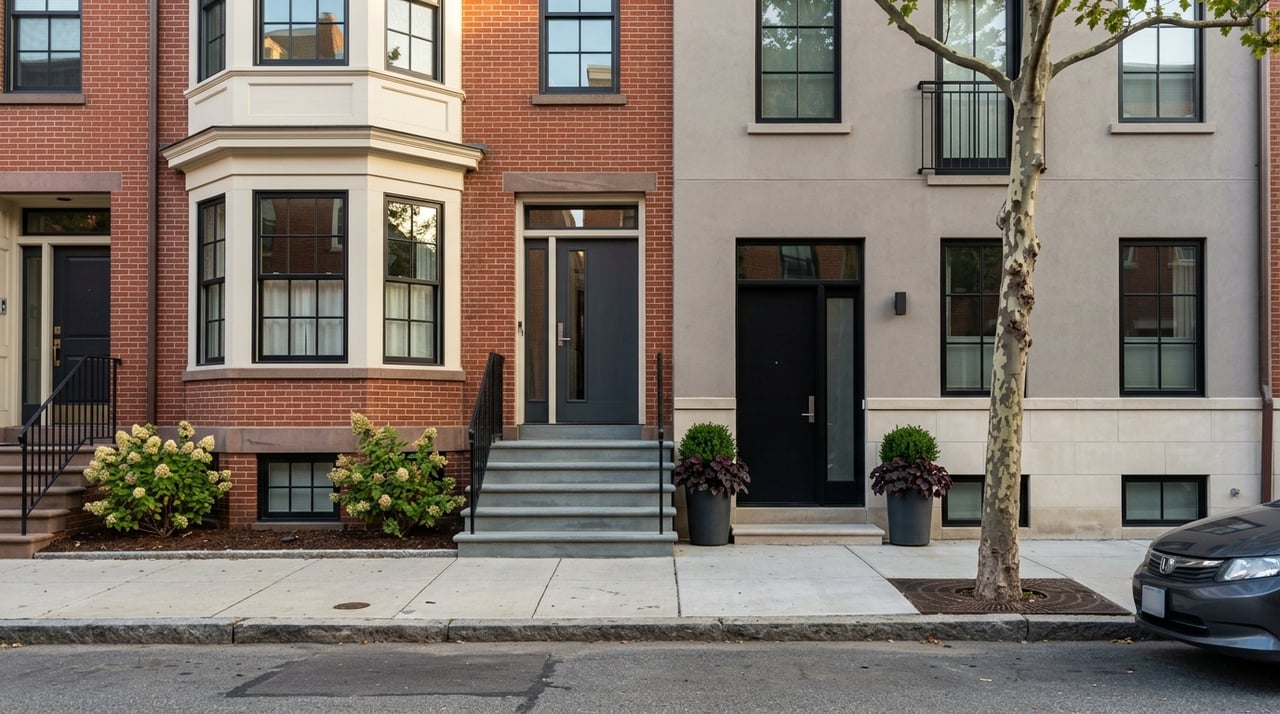
That combination matters if you are coming from Brooklyn. Instead of focusing on high-rise living, The Heights often appeals to buyers who want a more residential streetscape, lower-rise housing, and a real neighborhood main street. It can feel urban without feeling overly vertical.
For many Brooklyn buyers, the biggest draw is the housing stock. The Heights has a mix that leans more heavily toward houses and small multi-unit buildings than many other Jersey City submarkets. Point2Homes neighborhood data shows that 29.6% of units are in 2-unit buildings, 16.5% are in 3-4 unit buildings, and 10% are detached single-family homes.
That gives you options that can feel more familiar if you have been looking at rowhouses, small condo buildings, or multi-family homes in Brooklyn. The area also has an older housing stock, with a median construction year of 1957 and 42.3% of homes built before 1940. In practice, that often means more character, more variation from block to block, and more opportunities to find a home with a distinct layout or building style.
Price is not the only reason people move, but it is often what opens the door to considering a new neighborhood. As of March 2026, Redfin reports a median sale price of $840,000 in The Heights. In the same broad period, Brooklyn’s median sale price was $987,000.
That puts The Heights about $147,000 lower on median sale price. Redfin also shows a median sale price per square foot of $566 in The Heights versus $699 in Brooklyn, which is about $133 less per square foot.
For buyers comparing more house-like inventory, the gap can feel even more meaningful. The Elliman and Miller Samuel Brooklyn report for Q4 2025 shows median sale prices of $1.09 million for condos, $1.18 million for 1-3 family homes, and $3.1 million in the brownstone submarket. That helps explain why The Heights often resonates with buyers who love Brooklyn’s rowhouse feel but want a more attainable entry point.
In The Heights, buyers are often choosing from two-family homes, rowhouse-style properties, small multifamily buildings, or condos in lower-rise settings. That is a different experience from searching in areas defined by large luxury towers or highly compressed footprints. If your goal is more space, more flexibility, or a property with a more residential feel, that mix can be very appealing.
The neighborhood also supports both renters and owners. Point2Homes reports 24,342 housing units, with 66.9% renter occupancy and 33.1% owner occupancy. That balance can create a market with a broad range of housing types and price points, depending on the block and building.
A neighborhood has to work when you are not commuting, and this is another place where The Heights stands out. The Heights SID describes Central Avenue as the neighborhood’s spine, with more than 240 storefronts and over 100 categories of retail and services.
That kind of day-to-day convenience can matter just as much as headline home prices. You are not only buying square footage. You are buying into a place where errands, meals, local services, and casual neighborhood routines can happen close to home.
The Heights is also known for its hilltop setting and skyline views. The local SID highlights views from the Palisades, while the neighborhood’s parks include Pershing Field at 201 Central Avenue and Riverview-Fisk on Palisade Avenue, according to the neighborhood and parks information from the Heights SID.
If you are weighing The Heights against denser parts of Brooklyn or waterfront Jersey City, this can be an important difference. The setting often feels more grounded and residential, while still offering city energy and access to local amenities.
Transit is part of the appeal, but it helps to understand how it works before you buy. The Heights is more bus-led than subway-led. NJ Transit says Route 119 runs from Bayonne through Jersey City Heights to the Port Authority Bus Terminal, while Route 123 serves the Jersey City and Union City corridor and Palisade Avenue near Christ Hospital.
The neighborhood also has a connection to rail through the Congress Street elevator, which links The Heights to the 9th Street-Congress Street Hudson-Bergen Light Rail station, as noted by the Heights SID. For many buyers, that means Manhattan access is very doable, but the experience is less subway-direct than what you may be used to in many parts of Brooklyn.
Point2Homes transportation data backs that up. Average commute time is 43 minutes, 26.4% of residents use bus or trolleybus, 60% use a car, and 8.8% walk. In simple terms, commuting from The Heights can work well, but it usually requires a slightly different mindset.
The Heights is not just for one kind of buyer. Its population of 53,653 and median age of 36, according to Point2Homes, help explain why it can appeal to a wide range of people. The same source also reports that 59.6% of households are family households and 81.4% of workers are in white-collar employment.
Those numbers do not define the neighborhood, but they do suggest why it often feels flexible. Whether you are a first-time buyer, a move-up buyer, or someone looking for a more practical alternative to Brooklyn pricing, The Heights can check several boxes at once.
Broadly, yes, but the comparison works best when you line up similar housing types. If you compare The Heights with Brooklyn rowhouses, small multifamily homes, or lower-rise condo options, the value story becomes clearer. If you compare it with the most expensive brownstone pockets in Brooklyn, the gap can be dramatic.
There is also a rental angle worth noting. Point2Homes lists median gross rent in The Heights at $1,737 per month, while Apartments.com reports Brooklyn average rent at $2,996 per month as of April 2026. These are not identical metrics, so they should be treated as directional, but they still help show why the neighborhood can look attractive to people thinking about both buying and renting.
At its core, Jersey City Heights attracts Brooklyn buyers because it offers a familiar urban rhythm with a different value equation. You can find housing that feels more residential, price points that may open up more possibilities, and a neighborhood structure centered on a true main street rather than a luxury tower district.
You also get a setting that feels distinct within Jersey City. The Heights combines local businesses, parks, skyline views, and practical transit options in a way that often feels grounded and livable. For many Brooklyn buyers, that mix is exactly the point.
If you are weighing Jersey City against Brooklyn and want help narrowing down the right block, building type, or price strategy, Team Francesco can help you make sense of the options with local guidance and a hands-on approach.

Experience Matters! Make Team Francesco your #1 choice for all your real estate needs. With nearly 25 years of experience, you can trust Team Francesco is the best in the business to guide you in even the most challenging markets.
Stay up to date on the latest real estate trends.
Your Guide to Buying a Historic Home in Jersey City's Landmark Neighborhoods.

Great Options Include Hudson Valley and the Poconos.
We are there to serve and educate you every step of way, whether you’re seeking or selling property in the local area, or relocating anywhere around the globe. Count on us to listen to your needs, respect your privacy, and deliver the best sales experience possible.