Weehawken Waterfront vs Manhattan: Lifestyle Tradeoffs
June 4, 2026
June 4, 2026
If you have ever wondered whether moving across the Hudson could change your day-to-day life as much as your housing budget, you are not alone. Many buyers comparing Weehawken’s waterfront to Manhattan are really deciding between two different kinds of convenience: more space and riverfront living on one side, or unmatched city access on the other. The good news is that both can offer a polished, amenity-rich lifestyle. The key is knowing which tradeoffs matter most to you. Let’s dive in.
At a high level, this comparison comes down to space-and-waterfront value versus central-city convenience. Spring 2026 market snapshots show Weehawken at $673 per square foot with a $948,500 median listing price, while Manhattan sits at $1,458 per square foot and a $1.4 million median listing price. That puts Manhattan at about 2.17 times Weehawken’s listing price per square foot.
There is also a notable rental gap. Current market pages show a median rent difference of about $1,459 per month between the two markets. These are listing-based snapshots, so they are best used as directional guides rather than exact sale-to-sale math.
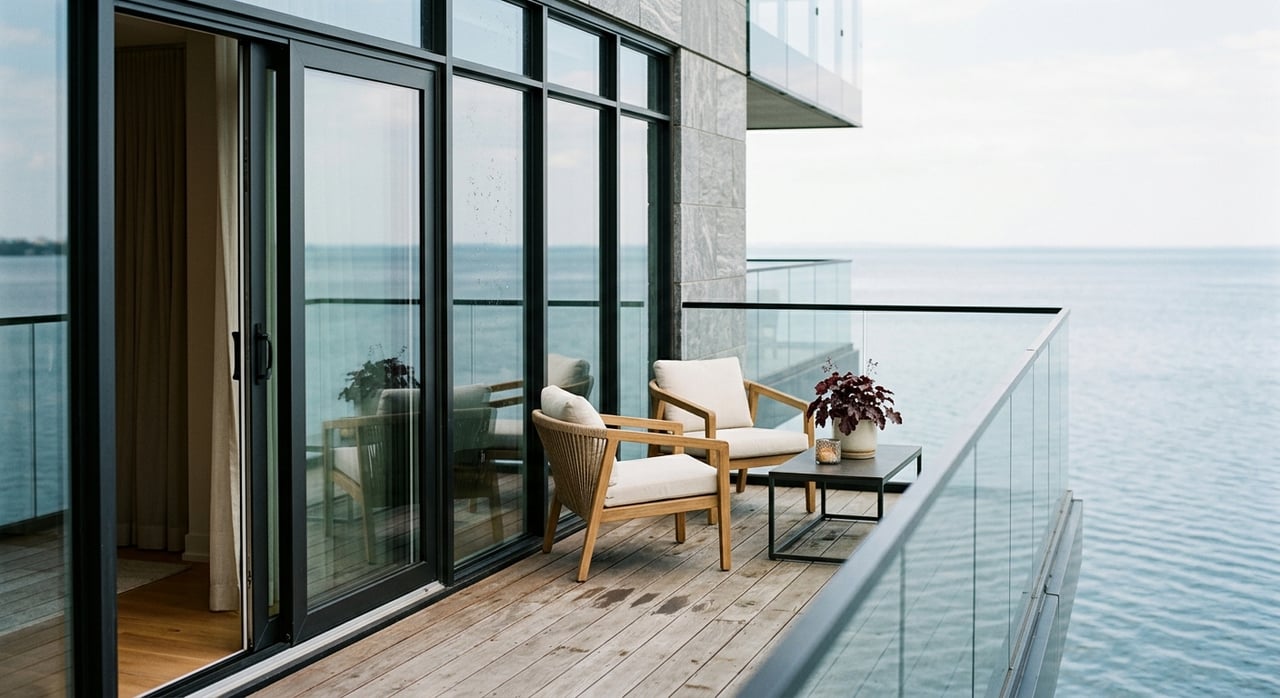
If your budget is fixed, Weehawken’s waterfront often gives you more interior space. Waterfront communities there are heavily condo-oriented, and many buildings skew toward larger layouts, especially two- and three-bedroom homes.
At Henley on Hudson, for example, the building lists 67 units, mostly in 2- and 3-bedroom layouts, with residences ranging from 1,165 to 1,998 square feet. Features include private terraces and direct access to the Hudson River Waterfront Walkway, plus nearby dining, shopping, galleries, and boutiques.
For many buyers coming from Hoboken, Jersey City, or Manhattan, that difference feels practical right away. Extra square footage can mean a real home office, larger living areas, more storage, or simply less compromise.
Manhattan is not limited to small apartments. Its condo market includes everything from studios to large luxury residences, and some buildings offer a broad range of floor plans and major amenity packages.
One Manhattan Square, for instance, includes studio through 4-plus-bedroom options and advertises 100,000 square feet of indoor and outdoor amenities. So if you want large-format luxury living, Manhattan can absolutely provide it. The tradeoff is that the same amount of space is materially more expensive based on current price-per-square-foot figures.
One of the biggest lifestyle differences is how you get around. Weehawken’s Port Imperial is set up as an intermodal hub, not just a residential waterfront. NY Waterway reports ferry service 7 days a week from Port Imperial to Midtown at W. 39th Street, with free shuttle service to and from that Midtown terminal.
The same route also serves Pier 11/Wall Street and Brookfield Place, which gives downtown commuters meaningful options. Posted fares list a $10.25 one-way adult ticket and a $327 monthly pass.
That means the Weehawken commute can feel more direct and more scenic, especially if your destination lines up with a ferry stop. It can also feel more intentional, since many residents build their routines around the ferry terminal, shuttle access, and the waterfront corridor.
Weehawken’s waterfront is not ferry-only. NJ Transit materials show Port Imperial ties into the Hudson-Bergen Light Rail, and that service connects to Hoboken Terminal, where you can transfer to PATH, rail, buses, and ferries.
That flexibility matters because it gives you backup routes. PATH also operates 24 hours a day, 7 days a week, which adds another layer of commuting convenience for people heading into lower Manhattan or connecting across the region.
In Manhattan, transit is less of a special feature and more of the baseline. The MTA says the subway has 472 stations on 25 routes, runs 24/7/365, and costs $2.90 for most riders. It also notes that fare capping can hold weekly spend at $34.
Using posted fares, a five-day round-trip ferry commute comes out to about $410 per month, while the subway weekly cap works out to about $147 per month. So while Weehawken can offer a premium commuting experience, Manhattan usually wins on raw affordability and network depth.
The Weehawken waterfront lifestyle is shaped by two things: public riverfront access and amenity-rich residential buildings. The New Jersey Department of Environmental Protection describes the Hudson River Waterfront Walkway as a public corridor for walking, running, biking, sightseeing, and fishing.
That public access becomes part of daily life in a way many buyers notice immediately. Instead of needing to plan around a park or destination, the waterfront itself becomes part of your routine.
Buildings there also lean heavily into full-service living. Henley on Hudson highlights direct access to the walkway, a nearby park with athletic fields and green space, and Riverwalk dining and retail. It also advertises an outdoor fire pit, resort-style infinity pool, theater room, billiards and game lounge, and shuttle service to the Port Imperial ferry terminal.
Avora adds another example of how strong the amenity package can be. Its official condo materials describe 30,000 square feet of indoor amenity space, including a screening theater, business center, boardroom, lounge, fitness center, 24-hour concierge, garage, storage, and a terrace with a pool, grills, and fire pits.
Manhattan can match or exceed that amenity level inside the building. One Manhattan Square pairs its 100,000-square-foot amenity package with a private garden, shuttle service, doorman and concierge, and on-site parking.
The difference is what happens outside the front door. In Manhattan, convenience is spread through the neighborhood street grid, subway access, and the city’s larger day-to-day ecosystem. In Weehawken, convenience tends to be concentrated in the building, along the walkway, and around the Port Imperial corridor.
That leads to a different daily rhythm. Weehawken often feels more anchored to home, the river, and a smaller activity zone. Manhattan often feels more dispersed, with more movement through the city as part of ordinary life.
If you are comparing the two, Weehawken’s waterfront often appeals most when you want:
For buyers coming from Hoboken or other Hudson County markets, this can be a compelling middle ground. You stay connected to the metro area while often getting a larger home and a more relaxed home-base environment.
Manhattan tends to be the better fit when you prioritize:
This is why Manhattan remains the benchmark for buyers who want walk-everywhere access and constant connectivity. You may pay more for the same amount of space, but the tradeoff is immediate access to a deeper transportation and neighborhood network.
If you are considering a waterfront purchase, lifestyle should not be the only lens. NJDEP and the New Jersey Department of Community Affairs describe ongoing Hudson River flood-resilience work that includes Weehawken, Hoboken, and Jersey City.
That does not mean waterfront ownership is a bad choice. It does mean you should do extra due diligence on flood exposure, building elevation, and insurance posture before you buy.
If you value more space, waterfront views, and a premium commute experience, Weehawken’s waterfront is often the stronger match. If you value maximum transit density, lower commuting costs, and broader city convenience, Manhattan still sets the standard.
There is no universal winner here. The right choice depends on how you want your everyday life to feel, not just what you want your address to say.
If you are weighing Weehawken against Manhattan, local guidance can make the decision a lot clearer. Team Francesco can help you compare buildings, commute patterns, pricing, and lifestyle fit across Hudson County’s waterfront markets.

Experience Matters! Make Team Francesco your #1 choice for all your real estate needs. With nearly 25 years of experience, you can trust Team Francesco is the best in the business to guide you in even the most challenging markets.
Stay up to date on the latest real estate trends.
Your Guide to Buying a Historic Home in Jersey City's Landmark Neighborhoods.

Great Options Include Hudson Valley and the Poconos.
We are there to serve and educate you every step of way, whether you’re seeking or selling property in the local area, or relocating anywhere around the globe. Count on us to listen to your needs, respect your privacy, and deliver the best sales experience possible.